
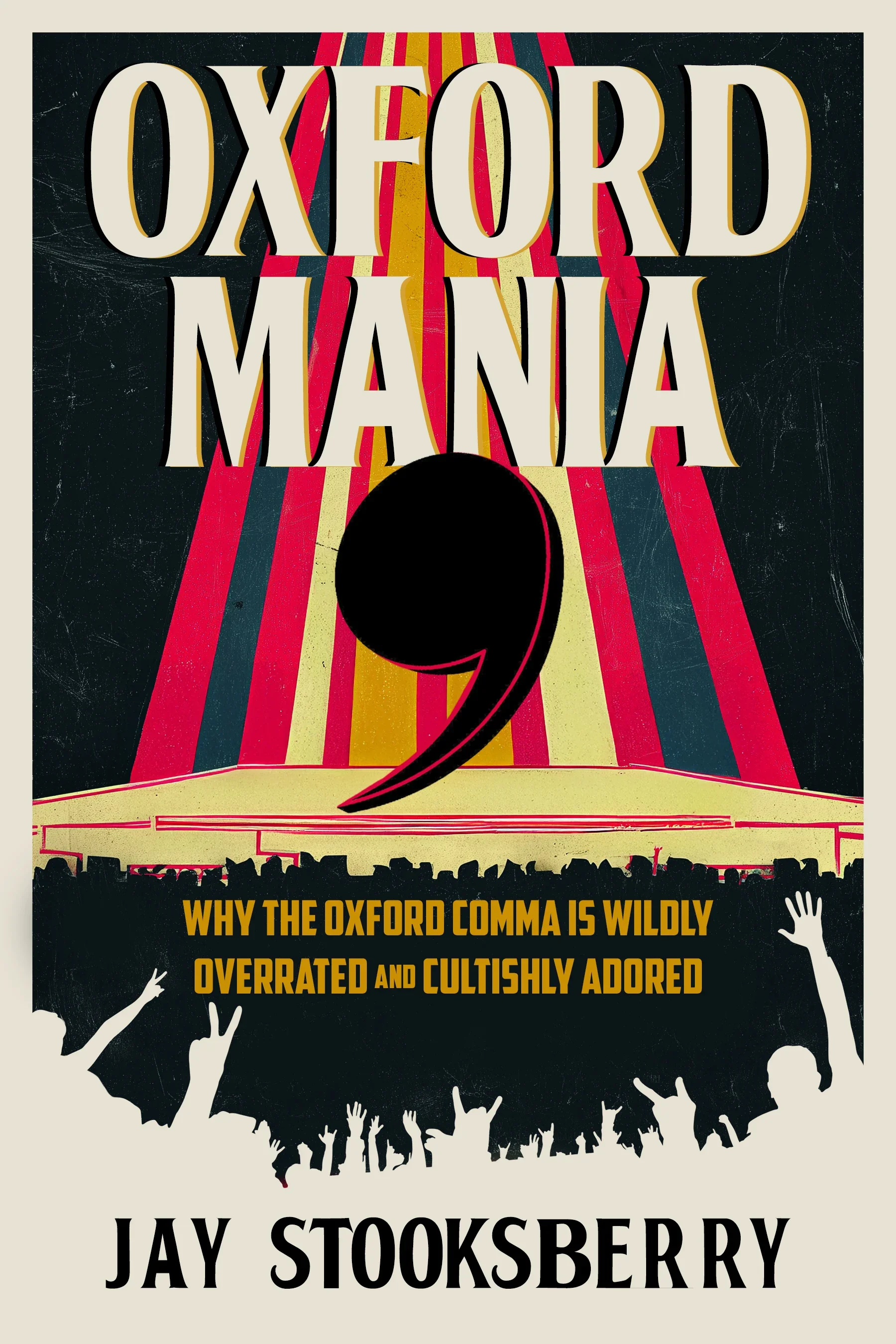
OXFORD MANIA
Why the Oxford comma is Wildly Overrated and Cultishly Adored
Available March 4, 2026!
Did JFK and Stalin moonlight as exotic dancers?
Was Nelson Mandela an 800-year-old demigod who collected dildos?
Did Ayn Rand and God fall in love and parent a child?
“Yes, yes, and yes,” say the Oxfordnistas, the fussy cult of grammatical zealots who obsess about that comma between the second yes and the conjunction—also known as the Oxford comma.
But they’re wrong.
In fact, there is a lot that most Oxford comma enthusiasts get wrong. They’re wrong about the Associated Press “banning” it. They’re wrong about O’Connor v. Oakhurst Dairy, the 2018 court decision they claim set a legal precedent for the comma. Most importantly, they’re wrong about the comma’s ability to clarify.
But when challenged about their devotion to the comma, they will dogmatically reply, “You can pry my Oxford comma from my cold, dead, and lifeless hands.”
So, how did one little comma attract so much attention and capture the imagination of millions?
Oxford Mania dives into the comma’s rich history and how it became the most famous punctuation mark in the English language. Its meteoric rise to stylistic fame shines light on the litany of bad-faith claims and logical fallacies propagating this overrated punctuation mark—all of which Oxford Mania debunks.
And if Oxfordnistas insist on prying the Oxford comma from their “cold, dead, and lifeless hands,” Oxford Mania accepts that challenge.